Showing posts with label South-America. Show all posts

Monday, March 21, 2016

5 Things You Need to Realize to Lead a Happier Life Abroad

Even though every country and culture is different, there is something that never changes; the people. No matter where you travel, near or far people generally stay the same. It is true that in some regions people may be friendlier, more open, more attractive or maybe even funnier, but deep down, we are all the same. The expat life is generally very similar no matter where you end up. In some countries it is easier to live as a foreigner than in others, either due to spoken languages or culture and habits but eventually it’s human to human interaction that matters. Take a look at a couple of different forums, for example, to see what the most common subjects are and you’ll realise that the issues – good and bad – stay the same all over.

1. Making friends with the locals isn't easy anywhere but that's completely OK!: Making friends as an adult is the same everywhere. For most of us it’s not as easy as it was back in school or university where you were all in pretty much the same situation, trying to fit in and form your group. As a grown-up there’s responsibilities and routines to take care of, your career and relationships. Making friends with new people is probably not on top of your everyday to-do list. When moving to a new country you might want to grow your social network as soon as possible, form strong relationships and find friends you can trust but relationships take time. You often read comments about how people of your new country are not interested in making friends with foreigners but at the end of the day it’s not a nationality issue as it simply comes down to differences in routine. While you are busy growing your network and trying to make new friends, the locals already have their network, friends and family. Of course you’ll befriend locals, but it takes time. Like real, authentic friendships always do. 

2. Once a foreigner, always a foreigner:
I often hear expats talking about how difficult it is to integrate into a new society because people treat you as a foreigner, yet the biggest problem is admitting that it’s really up to you to fit in, not the other way around. I say this from my own experience; no matter how fluent you are in the local language or how well you’ve integrated, you will always be a foreigner in the eyes of the locals, if they know that you come from another country. And that’s a good thing! You don’t need to change yourself in order to fit in, even less to be accepted. What is important is to admit that you are a foreigner and that’s how it will be. It’s completely ok for people to treat you as a foreigner because that’s how they see you and that’s who you are. You are a foreigner that has moved to their country and has now become a part of the society. You should do your best fitting in but never change who you are because those who like you will also love the fact that you come from another culture.


3. Bureaucracy is everywhere: People often complain about the bureaucracy they must go through when starting out their lives in a new country. No matter how easy it is, there’s always someone complaining. In Europe it is relatively easy, though. As a EU citizen you don’t even need a visa or a work permit! Depending on the country, there is always paper work to be done and documents to be filled but would you really want it to be otherwise? The paper work is there to ensure proper registration to make your life a little easier in your new society. The biggest difficulties are often caused by the language barrier as many countries still don’t have official documents in English. In the Netherlands, where we live, we only had to visit the city hall once to register ourselves and get the social security number which was then mailed to us and second time was the IND (immigration and neutralization services). That's pretty straight forward to me!

4. Finding a job is much easier when you know the local language: I stumbled upon a forum post complaining about how difficult it is to find a job in Finland if you are still working on your Finnish language skills! Well, that’s the case in most parts of the world! Unless you’re planning to move to an English speaking country, you most likely need to learn the local language in order to work. It’s quite logical. You cannot move to Lithuania and expect everyone to switch to English, right? However, there are  plenty of regions where you will be able to start off your expat life with minimal skills in local language. Search for regions with many international company headquarters or countries open for foreign workforce such as Amsterdam and Eindhoven in Netherlands, Sophia-Antipolis in France, and Malta, to mention a few. Many of these countries also have a special tax arrangement for highly skilled expats or retiring pensioners. A lot depends also on your line of work as many professions don’t really have a language requirement! Don’t get angry because the local language is something else than whatever it is that you speak. You’re the guest, after all. Learn the language, expand your horizons!


5. Moving for money? Think about the taxes first!: Before going anywhere, do your research on the cost of living, salaries and taxes in the country or area you want to live in. Dig deep, don’t just multiply whatever it is you’re making now to fit the level you think would be enough. You won’t be going anywhere if you form your salary expectation based on your gut feeling. Those moving to a higher economy often think they’ll improve their status in the new country, however if you continue doing the job you had back at home (assuming it’s on the same level in both countries), your income will most likely stay around the same level. For example, working as a construction worker in Poland won’t make you rich doing the same job in the Netherlands. The income is probably much higher, but so is the cost of living, food and taxes. Search for countries where your skill-set is needed, like nurses in Norway or oil & gas engineers in Saudi-Arabia! 


Wednesday, March 16, 2016

Beginners guide to visiting vineyards and wineries

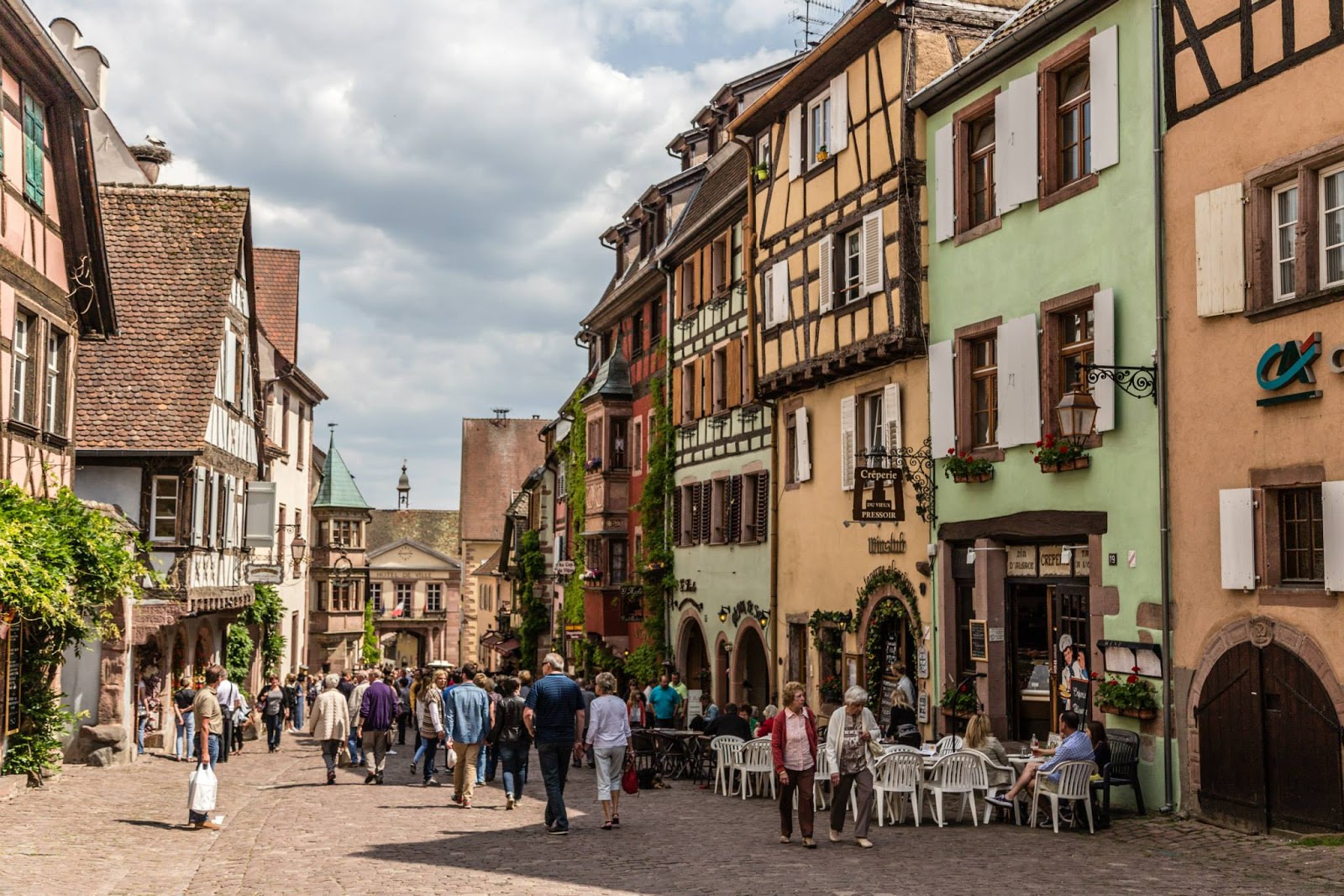
Beautiful Alsace, France


Let's not get too serious. Even though there's rules and etiquette you should know about your wines, you don't have to be a wine expert to visit a vineyard! It helps to have basic understanding of wine tasting, grapes and regions but you'll be completely fine by just having genuine interest in what you drink. However, visiting a vineyard can raise lots of questions if doing so for the first time.


Port wine barrels in Porto


How to find the good ones?


There's plenty of information available online but also in books and food & wine magazines. Many online guides have wine routes you can follow and pretty much every region even has a website for the regional vineyards with addresses. We've been using Hugh Johnson's Pocket Wine book which has been ok for our purposes but there are also other similar books around. Choose the book depending on your level of wine knowledge and don't buy a pig in a poke as the books tend be quite different and often targeting certain type of audience. 

A few links to popular wine routes and other information:

Alsace, France

Mosel, Germany

Piemonte, Italy

Amalfi Coast, Italy
http://www.marisacuomo.com/en/1034/tastings.htm

Spain


Taylor's, Porto, Portugal
If possible, attend tastings before your trip to find local gems. Wine tastings are often arranged by wine shops, wine tasting courses or bars and restaurants in your region. You might not like the wines of the most popular and hyped vineyards at all, so do a bit of research (if possible) and find the ones you'd genuinely enjoy the most. 

If you really want to become good at this, attend a wine course to learn all the ins and outs of wines, wine regions and tasting. It's a fascinating world!

We always like to taste the local wines even in regions not widely known as wine producers. There are some great wine regions in the Balkans, for instance in Croatia, Romania and FYR Macedonia, to mention a few. This is a fantastic way to explore wines you would normally not be able to buy where you live, therefor we highly recommend always asking for some local wine recommendations when traveling.

In case you already have favorite wines from the area you're visiting, make sure to visit the vineyards! You'll surely love your wines even more when you know where they're coming from. 


Let them know you're coming!


Preparation is the key! Even though most vineyards and wineries are open on business hours and Saturdays, it's good to give them a call or send an email about your visit to make sure they are open and accepting visitors. Some of them are even open outside of the normal hours if you plan your visit in advance. When first visiting Alsace I was a little nervous as we don't speak any French but every vineyard I called spoke English as they get a lot of visitors from all over the world. We've never come across a wine maker who wasn't thrilled to have people over so give them a call and plan your visit! Most vineyards accept visitors even without making an appointment but it's always nicer to let them know in advance, if possible. However, if you stop by unannounced only to find the doors closed and fences locked, make a plan B and drop by another nearby vineward/winery.

We have normally informed the vineyards about our visit with an approximate time but have also popped in to some larger ones while driving by.


One of our favorite wines, Marisa Cuomo Furore Bianco, is made in this beautiful scenary on Amalfi Coast, Italy


Planning and scheduling

You can either just buy the wines you already know you like (without tasting, even though tasting is always highly recommended) or taste and buy the ones you enjoyed the most - or not buy at all, really depending on how you feel about the wines. Every vineyard offers tastings so you know what you're buying. If planning several visits in one day it's a good idea to spit majority of the wines. You can really consume quite a lot of wines during one visit, getting tipsy really doesn't help your taste buds.


Wine events and festivals are great source to find great wines. Budapest Borfeztival is a popular Hungarian wine event held annually.


One visit takes roughly one to two hours depending on what you're doing there. Tasting and buying is about an hour but if you're visiting a more touristic place it might take more than two in case you're taking a tour. I guess a fair estimate of three vineyards a day is a good pace when considering driving and tasting. Be prepared to wait for your turn in tastings and buying if it's busy.

Riquewihr, Alsace, France


Storage and transportation

Storage and transportation is important when traveling with wines. If you are traveling by car, make sure the temperature stays around the same level the whole time without any temperature peaks, don't park the car in the sun or let it freeze as this will affect your wines in all the wrong ways and ruin it! When flying, make sure you pack your wines properly to prevent a small catastrophe. We've successfully flown with about 5 wine bottles in each large suitcase. Most wine producers offer shipping at reasonable prices which might be a good option to consider when buying more than a few bottles.


Trier in Germany is famous for it's wines. And they are good!


Monday, February 15, 2016

What languages do you really need to get by in the world, pt. 1


In 2012 we took my grandfather to Italy. It was the first time in 20 years he went abroad, and first time ever that he traveled to a non-Russian speaking country. He did quite a bit of traveling when he was younger. This was back when the Soviet Union still bloomed, and all of the countries he visited were under the soviet occupation, thus at least partly Russian speaking. It came as a bit of a shock to him when he realized that the nice, Italian lady at the reception of one of our hotels really didn't speak a word of Russian. He turned to another employee, yet he couldn't help him either. 

His world is much bigger now but it took a couple of more trips to other countries in western Europe for him to realize (and admit) that Russian is currently not one of the major languages of western Europe. What languages do you need to get by in the world then? Here are a few of our observations, starting with Europe and the Americas.


Europe: English works in most of Europe with some exceptions like some French and German speaking regions as well as the Balkans. Even in Spain and Portugal, with very widely spoken languages of their own, you will be able to communicate in, at least some level of English. However, pay a visit to the French speaking areas in Belgium or France itself and you will most likely need to use your hands and toes to communicate. In countries such as Germany, Austria and Switzerland you might also need to grab that good old German phrase book, especially when traveling outside the capital areas. 

Eastern Europe has many Russian speakers and even though the Baltic citizens often prefer English, you can easily find Russian speakers in most businesses as about half of the population has Russian as the native language. Traveling south from Baltics to countries such as Poland, Czech Republic and Hungary you will be able to use your German, but English is very widely spoken as well. When you finally reach Balkans, you can use English which works fine in most regions but knowledge of Russian helps a lot. Countries like Romania and Bulgaria have surprisingly wide population of French and Italian speakers also, at least this is what we have noticed on our trips. Traveling in Macedonia, Montenegro and Turkey is much easier if you understand a bit of Russian. Speaking Russian in those regions will actually work in your benefit and probably even give you a small discount with your purchases!

Did you know that many people living in Kosovo speak English due to the presence of Nato troops in the region?

In Greece you’ll get by in English quite well, but also German is widely spoken, at least in most touristic areas.


All in all, Europe is incredibly multilingual and you will get by by speaking at least one of the following languages: English, German, French, Russian. However, Speaking either Spanish, Italian or Portuguese will also help you as these three languages are very similar - and widely spoken.

Central and South America, Caribbean: Spanish will get you furthest when traveling in this region. It is true that Portuguese is also very widely spoken, mainly in Brazil and touristic regions in Argentina but Spanish is the most common language used in majority of these countries. In the Caribbean and northeast regions of South America you can get by in Dutch, German and French but majority also speak Spanish and/or English. For example Aruba, Curacao and Bonaire are all Dutch (and/or Papiamento) speaking islands. French is spoken in Haiti, Guadeloupe and Martinique, Dominica and Saint Lucia as well as the French region of Saint Martin (aka Sint Maarten). 

Cuba, Dominican Republic and Puerto Rico have Spanish as the native language.

Brazil is an exception making Spanish speakers a minority! In Brazil you will need Portuguese but, German and Italian might help you also. By the borders you'll probably get by in Spanish, but don't count on it. Again, English is, of course, spoken is touristic areas but Brazilian is the biggest and most important language in this country. 

One of the surprising languages you’ll be able to use in Americas is German. Starting all the way from Mexico down to northeastern parts of Caribbean (some regions of Easter Islands)  and continuing all the way down to Brazil and Paraguay you should be able to use German, at least in some areas. Some schools and universities in Mexico actually offer German as one of the optional languages to study meaning you can choose either English or German. 

It is fascinating how much you learn about the different regions in the world only by knowing the locally spoken languages! Did you know that there used to be a small Courish settlement (Baltic tribe that used to live in parts of present day Latvia and Lithuania) in Tobago (Trinidad and Tobago of present day South-America) back in the 17th/18th century? Wonder what would have happened had the colony succeeded, and if we could add one of the Baltic languages to the list?

Thursday, June 4, 2015

Days in Buenos Aires

Destination: Buenos Aires, Argentina
Time of travel: December 2013
Duration: 10 days
Travel plan: City trip to Buenos Aires


A beautiful, green city. European inspired architecture and wide streets. Warm people with lots of attitude. Opinionated, proud of their origins. Political turmoil. Wealth inequality. Steak restaurants. Dry leaves on the road in afternoon heat. Poverty. Strenght. Political Demonstration. We didn't expect tango blasting out of the windows but the steaks we did assume to be extraordinary, which they were.


These are a few things we expected to experience in Buenos Aires. Nothing fancy but nothing overly negative either. We were aware of the poverty issues, more so related to the wealth inequality aspects. Also the politics as the Argentinians do like to strike. Maybe we did rely a little too much on our romanticized idea which was based on various media sources. We were prepared to experience even negative surprizes but shallowness was not one of them, which turned out to be what we experienced the most. Experienced travellers as we are, we were prepared to watch our belongings.


It was beautiful. It was green. And it was also European inspired. In the matter of fact it looked like Paris, Madrid, Barcelona and Rome all combined. Imagine that!


On the other hand, throw in some greedy hands reaching for your handbag. Several pairs of eyes following your every step. Don't you dare taking out your camera or be prepared to find a safe spot to hide. Don't get confused by the occasional friendliness you meet as there are plenty of those who will show you your spot. You know, smack down your wealthy European ass, since you can buy another camera, mobile phone, watch - all of it. Anytime. Can't you? So why not try to rob you. On almost every step you take.


You might try and play it safe. You don't wear any jewellery, not even the plastic bracelet you bought from H&M. You know, not to attract any attention. You take off your wedding ring and try to store it somewhere safe. The safe deposit box in your hotel room is not the place to store it so you try to hide it. You also hide your passport - just in case. You don't walk with your camera, you keep it hidden and covered. You feel uncomfortable. You are stressed and you want to go home. Eventually you just book daytrips via travel agent, sit by the hotel pool and hope you will not get robbed on your way back from the restaurant in the evening. Not that you would have anything to rob off anyway but they would probably still give it a try, you European scumbag.


You are safe! You made it! You only had to file one police report after you forgot to take off that golden necklace and it was ripped off you in the middle of a crowded street on a sunny afternoon. You made it! 


Actually, you didn't. It was the staff at your 5 star designer hotel that got you by arranging someone to steal your belongings. Their faces gave them away. Their behaviour gave them away. The police who didn't care to watch the surveillance tape gave them away. They didn't care. Just file a report, they said. Your insurance will cover it, they said.