Tuesday, March 29, 2016

Hiking Mount Olympus, the meeting place of the mythical Gods


Hiking up Mount Olympus in Greece was a big deal for us. It was our first overnight hike as well as a first real mountain hike. We consider ourselves to be in a good condition and semi-experienced hikers but as we never had any real experience hiking on a mountain, there were a couple of surprises awaiting for us! It was a fantastic experience we will definitely do again - fortunately with a couple of new tricks up our sleeves!


First steps of our journey


Going up!
We teamed up with our guide Nikos from Hikes4All (www.hikes4all.gr) who planned our hike beforehand, gave us some great advice on how to prepare for the trip and took great care of us during the two day hike.

We decided to hire a guide for two reasons;

- We didn't know what to expect (schedule, weather, gear, techniques)
- We wanted to be safe and not end up making rookie mistakes. It's a mountain, after all.

It was a great decision. First of all, we learned a lot about hiking in the mountains and how to plan the trip. Secondly, Nikos was great help for us as he knew the trails and the people we needed to know to make the trip fun and efficient. What we also loved was that it was just the three of us so no waiting for others, no queuing, no constant babbling.


Donkeys carrying goods down from the mountain
Mount Olympus is a very popular hiking destination and you will see many fellow hikers on the way. Most of them hike to the Spilios Agapitos refuge located in  the middle of the ascent half way to the Scolio peak, some of them leave the same day and some stay the night at the cabin. About one third of hikers make it further to one of the peaks. Another interesting observation was that you really see people of all ages hiking up there, kids, elderly folks, everyone is represented!

We started the hike with a little warm-up as we had requested adding some extra kilometers to the first day. It was a great idea and we got to see some more of the beautiful Greek nature. After a two hour stroll Nikos drove us to the starting point of the trail to  Prioni from where we started the ascent towards refuge Spilios Agapitos. Light lunch and off we went.


..and sometimes we all need to rest!
The 1st ascent was enjoyable although it did contain lots of man-made wooden stairs. It was a combination of a trail and stairs. We kept it somewhat slow as we needed to spare energy for the 2nd ascent and more importantly, also the descent the next day. Weather was beautiful, sunny and hot. The trees offered some shade but a hat would have helped better.

We arrived to the refuge right on time for sunset. We were greeted by the three lovely and friendly dogs belonging to the family who runs the place and after getting our three-people room with bunk beds we were ready to relax and enjoy the nature. It's quite a unique experience to spend a night up in the mountains looking up to the stars and down to the sea. We had a nutritious dinner with some great wine while enjoying the peaceful atmosphere. The lights were turned off at 22.00. You still had some people walking around in the area but basically it was time to sleep!

I guess normally it gets chilly during the night. This time it was very warm and it didn't get much below 18C. However, the weather can change fast. As it was a much hotter night than usual, we didn't get a very good night sleep. It was way too hot during the night as we didn't realize to open the window, also we had too many clothes on as we were prepared for a cold night.


Toni settling in for the night

Evening at the Spilios Agapitos Refuge
Waking up at dawn is surprisingly easy when you're surrounded by nature and fresh air! We got up before sunrise, had a tasty breakfast and prepared for the day. The plan was to hike up to Scolio and down almost immediately, take a break to get some lunch and continue all the way down. It started to get busier by the minute as we were gathering our stuff, some were getting ready to go up, some prepared for their journey down and some were staying.


One of our friendly four-legged companions
We had another kilometer to hike up, which was the same distance we did on the first day. Here it got a little more rough yet also the view got better. We were accompanied by one of the dogs who followed us almost the whole way up to Scolio and also showed us where the wild goats were. What a fantastic friend we made!

Hiking up to Aghios Antonios
The scenery changed quite a bit and there were less trees and more pebbles. The weather was great but as we were almost in 3000m it was also very windy and somewhat chilly. Hiking up wasn't particularly difficult. It was more slippery than the day before, as the pebbles were constantly moving under our feet. At this stage we realized the importance of four items; sunscreen, a hat, windproof jacket and hiking sticks. Generally we prefer hiking without sticks but on a terrain like this they are irreplaceable! Nikos gave his sticks to me (Kris) which helped tremendously!

Kris and Nikos at Scolio, 2911m


We made it!


Reaching the Scolio peak was fantastic! It was a true accomplishment and such a priceless experience! After enjoying the view for a  good fifteen minutes or so, sipping some water and resting our legs, it was time to start the most difficult part - descent. Remember the pebbles I've been talking about for a few times before? It really didn't get any easier at this point. We followed Nikos' example and walked very slowly planning every step carefully. Looking down to the potential slide was terrifying and the amount of energy we had to use to concentrate  felt like a heavy burden on our shoulders. It was also the most time consuming part of the hike as it wasn't exhausting only physically but also mentally.


The descent got a little easier the closer we were to the refuge and after the lunch we returned to the area with more trees and a solid ground. Being exhausted from the 1st and 2nd part of the day, the 3rd wasn't easy either. It didn't require as much energy but not having much left only made it harder. Luckily the trail got easier and the forest thicker. We made it down around 17.00, exhausted and feeling totally accomplished!

This is how steep it was!
We spent the second day in bed feeling absolutely exhausted, bloated and sun burnt. It was quite a stretch for our bodies even though we can handle a lot! However, it was such a great experience, we'd do it again anytime!

Rise and shine, the mountain awaits and Nikos is leading the way!


Monday, March 21, 2016

5 Things You Need to Realize to Lead a Happier Life Abroad

Even though every country and culture is different, there is something that never changes; the people. No matter where you travel, near or far people generally stay the same. It is true that in some regions people may be friendlier, more open, more attractive or maybe even funnier, but deep down, we are all the same. The expat life is generally very similar no matter where you end up. In some countries it is easier to live as a foreigner than in others, either due to spoken languages or culture and habits but eventually it’s human to human interaction that matters. Take a look at a couple of different forums, for example, to see what the most common subjects are and you’ll realise that the issues – good and bad – stay the same all over.

1. Making friends with the locals isn't easy anywhere but that's completely OK!: Making friends as an adult is the same everywhere. For most of us it’s not as easy as it was back in school or university where you were all in pretty much the same situation, trying to fit in and form your group. As a grown-up there’s responsibilities and routines to take care of, your career and relationships. Making friends with new people is probably not on top of your everyday to-do list. When moving to a new country you might want to grow your social network as soon as possible, form strong relationships and find friends you can trust but relationships take time. You often read comments about how people of your new country are not interested in making friends with foreigners but at the end of the day it’s not a nationality issue as it simply comes down to differences in routine. While you are busy growing your network and trying to make new friends, the locals already have their network, friends and family. Of course you’ll befriend locals, but it takes time. Like real, authentic friendships always do. 

2. Once a foreigner, always a foreigner:
I often hear expats talking about how difficult it is to integrate into a new society because people treat you as a foreigner, yet the biggest problem is admitting that it’s really up to you to fit in, not the other way around. I say this from my own experience; no matter how fluent you are in the local language or how well you’ve integrated, you will always be a foreigner in the eyes of the locals, if they know that you come from another country. And that’s a good thing! You don’t need to change yourself in order to fit in, even less to be accepted. What is important is to admit that you are a foreigner and that’s how it will be. It’s completely ok for people to treat you as a foreigner because that’s how they see you and that’s who you are. You are a foreigner that has moved to their country and has now become a part of the society. You should do your best fitting in but never change who you are because those who like you will also love the fact that you come from another culture.


3. Bureaucracy is everywhere: People often complain about the bureaucracy they must go through when starting out their lives in a new country. No matter how easy it is, there’s always someone complaining. In Europe it is relatively easy, though. As a EU citizen you don’t even need a visa or a work permit! Depending on the country, there is always paper work to be done and documents to be filled but would you really want it to be otherwise? The paper work is there to ensure proper registration to make your life a little easier in your new society. The biggest difficulties are often caused by the language barrier as many countries still don’t have official documents in English. In the Netherlands, where we live, we only had to visit the city hall once to register ourselves and get the social security number which was then mailed to us and second time was the IND (immigration and neutralization services). That's pretty straight forward to me!

4. Finding a job is much easier when you know the local language: I stumbled upon a forum post complaining about how difficult it is to find a job in Finland if you are still working on your Finnish language skills! Well, that’s the case in most parts of the world! Unless you’re planning to move to an English speaking country, you most likely need to learn the local language in order to work. It’s quite logical. You cannot move to Lithuania and expect everyone to switch to English, right? However, there are  plenty of regions where you will be able to start off your expat life with minimal skills in local language. Search for regions with many international company headquarters or countries open for foreign workforce such as Amsterdam and Eindhoven in Netherlands, Sophia-Antipolis in France, and Malta, to mention a few. Many of these countries also have a special tax arrangement for highly skilled expats or retiring pensioners. A lot depends also on your line of work as many professions don’t really have a language requirement! Don’t get angry because the local language is something else than whatever it is that you speak. You’re the guest, after all. Learn the language, expand your horizons!


5. Moving for money? Think about the taxes first!: Before going anywhere, do your research on the cost of living, salaries and taxes in the country or area you want to live in. Dig deep, don’t just multiply whatever it is you’re making now to fit the level you think would be enough. You won’t be going anywhere if you form your salary expectation based on your gut feeling. Those moving to a higher economy often think they’ll improve their status in the new country, however if you continue doing the job you had back at home (assuming it’s on the same level in both countries), your income will most likely stay around the same level. For example, working as a construction worker in Poland won’t make you rich doing the same job in the Netherlands. The income is probably much higher, but so is the cost of living, food and taxes. Search for countries where your skill-set is needed, like nurses in Norway or oil & gas engineers in Saudi-Arabia! 


Wednesday, March 16, 2016

Beginners guide to visiting vineyards and wineries

Beautiful Alsace, France


Let's not get too serious. Even though there's rules and etiquette you should know about your wines, you don't have to be a wine expert to visit a vineyard! It helps to have basic understanding of wine tasting, grapes and regions but you'll be completely fine by just having genuine interest in what you drink. However, visiting a vineyard can raise lots of questions if doing so for the first time.


Port wine barrels in Porto


How to find the good ones?


There's plenty of information available online but also in books and food & wine magazines. Many online guides have wine routes you can follow and pretty much every region even has a website for the regional vineyards with addresses. We've been using Hugh Johnson's Pocket Wine book which has been ok for our purposes but there are also other similar books around. Choose the book depending on your level of wine knowledge and don't buy a pig in a poke as the books tend be quite different and often targeting certain type of audience. 

A few links to popular wine routes and other information:

Alsace, France

Mosel, Germany

Piemonte, Italy

Amalfi Coast, Italy
http://www.marisacuomo.com/en/1034/tastings.htm

Spain


Taylor's, Porto, Portugal
If possible, attend tastings before your trip to find local gems. Wine tastings are often arranged by wine shops, wine tasting courses or bars and restaurants in your region. You might not like the wines of the most popular and hyped vineyards at all, so do a bit of research (if possible) and find the ones you'd genuinely enjoy the most. 

If you really want to become good at this, attend a wine course to learn all the ins and outs of wines, wine regions and tasting. It's a fascinating world!

We always like to taste the local wines even in regions not widely known as wine producers. There are some great wine regions in the Balkans, for instance in Croatia, Romania and FYR Macedonia, to mention a few. This is a fantastic way to explore wines you would normally not be able to buy where you live, therefor we highly recommend always asking for some local wine recommendations when traveling.

In case you already have favorite wines from the area you're visiting, make sure to visit the vineyards! You'll surely love your wines even more when you know where they're coming from. 


Let them know you're coming!


Preparation is the key! Even though most vineyards and wineries are open on business hours and Saturdays, it's good to give them a call or send an email about your visit to make sure they are open and accepting visitors. Some of them are even open outside of the normal hours if you plan your visit in advance. When first visiting Alsace I was a little nervous as we don't speak any French but every vineyard I called spoke English as they get a lot of visitors from all over the world. We've never come across a wine maker who wasn't thrilled to have people over so give them a call and plan your visit! Most vineyards accept visitors even without making an appointment but it's always nicer to let them know in advance, if possible. However, if you stop by unannounced only to find the doors closed and fences locked, make a plan B and drop by another nearby vineward/winery.

We have normally informed the vineyards about our visit with an approximate time but have also popped in to some larger ones while driving by.


One of our favorite wines, Marisa Cuomo Furore Bianco, is made in this beautiful scenary on Amalfi Coast, Italy


Planning and scheduling

You can either just buy the wines you already know you like (without tasting, even though tasting is always highly recommended) or taste and buy the ones you enjoyed the most - or not buy at all, really depending on how you feel about the wines. Every vineyard offers tastings so you know what you're buying. If planning several visits in one day it's a good idea to spit majority of the wines. You can really consume quite a lot of wines during one visit, getting tipsy really doesn't help your taste buds.


Wine events and festivals are great source to find great wines. Budapest Borfeztival is a popular Hungarian wine event held annually.


One visit takes roughly one to two hours depending on what you're doing there. Tasting and buying is about an hour but if you're visiting a more touristic place it might take more than two in case you're taking a tour. I guess a fair estimate of three vineyards a day is a good pace when considering driving and tasting. Be prepared to wait for your turn in tastings and buying if it's busy.

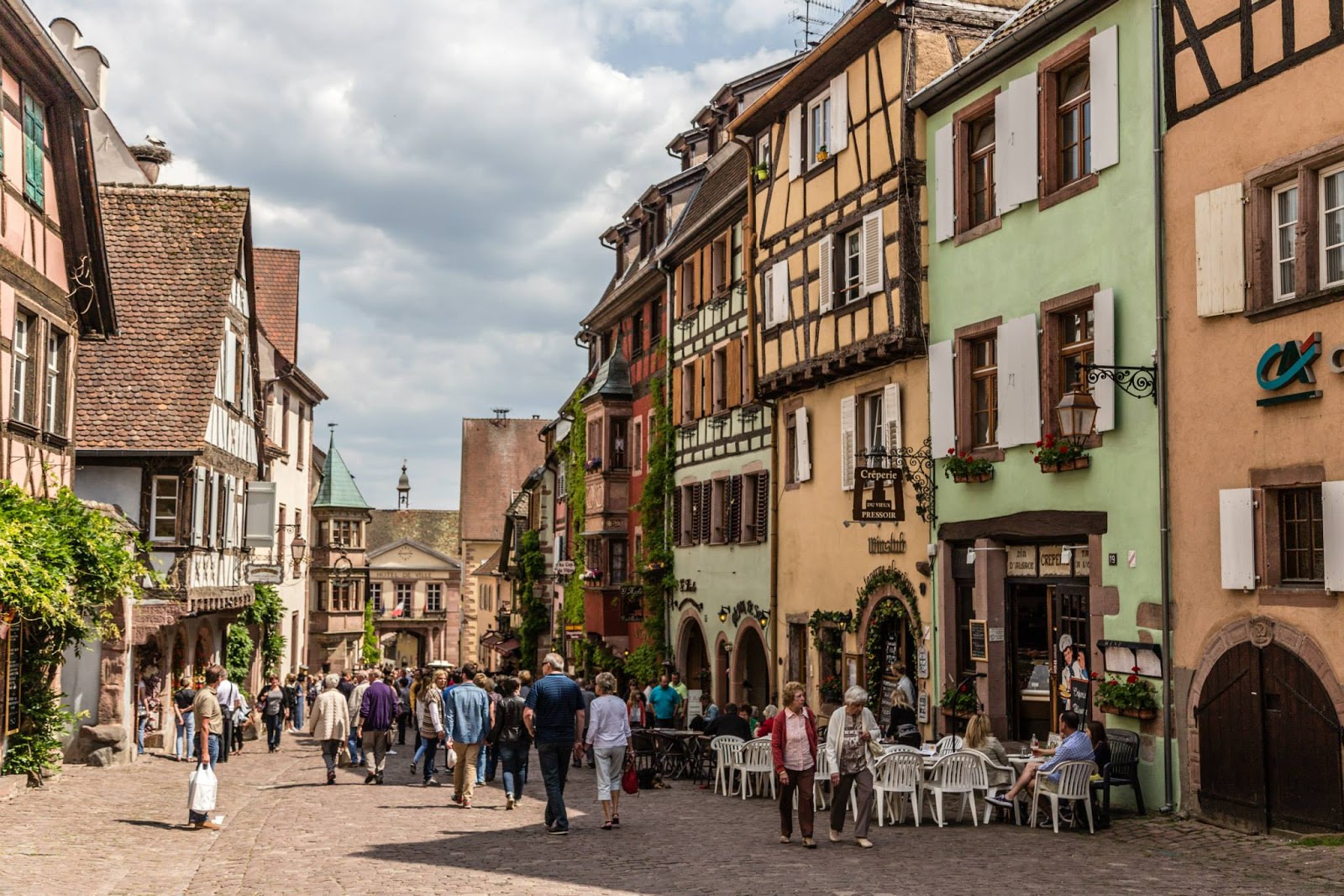
Riquewihr, Alsace, France


Storage and transportation

Storage and transportation is important when traveling with wines. If you are traveling by car, make sure the temperature stays around the same level the whole time without any temperature peaks, don't park the car in the sun or let it freeze as this will affect your wines in all the wrong ways and ruin it! When flying, make sure you pack your wines properly to prevent a small catastrophe. We've successfully flown with about 5 wine bottles in each large suitcase. Most wine producers offer shipping at reasonable prices which might be a good option to consider when buying more than a few bottles.


Trier in Germany is famous for it's wines. And they are good!


Wednesday, March 9, 2016

Enjoy your flight! How to make the long-haul comfortable

After a couple of uncomfortable long haul flights, train rides or road trips majority of us start thinking of ways to make this time slightly more pleasant. It does depend a lot on the aircraft or other vehicle you're traveling with. Being stuck for 6+ hours in a BOEING 757 flying over the Atlantic ocean doesn't exactly make you think of comfort and tranquility. However, there are great ways to make it a little better.

Photo Source: Dreamatico.com


Wear something comfortable

Starting with the obvious. Either you step in the plane wearing your favorite pair of pants or you change into your comfortable attire before or during the flight, this is rule #1 for us when flying long haul. Good, comfortable and breathable clothes are a must. Any flight with a duration of more than five hours and it requires a more comfortable travel outfit. Make it easier for yourself by choosing something that's easy to wear and fast to change into. Plan it carefully as the best outfits can also be worn outside of the plane or are easily transformed for different climates. Compression socks are a must!

Some great options are jeggings (the lovechild of jeans and leggings), sports clothing (there are some great lifestyle collections by lots of sports brands) and loose sweaters and cardigans in natural fabrics.


Ear plugs and a sleeping mask

Flying is noisy and getting a good amount of sleep is rare. A good sleeping mask and a pair of (quality) ear plugs are almost necessary. You can replace earplugs with earphones even if the music is off. They block majority of noise but you still hear the food cart approaching. To get an upgraded sleeping experience, go for noise cancelling headphones/earphones.


Earphones

Even if you're not into music, bring your own earphones for the in-flight entertainment/movies. The ones they give you on the plane (and sometimes even ask you to pay for!) aren't worth the annoyance.


Hygiene

Pack some travel sized toothpaste, toothbrush, face & hand wipes and moisturizer.

Ladies, take off your make-up. I know, sounds like too much of an effort but trust me, you'll feel so much better! Before arrival, just apply a light make-up again and you look glorious! If you travel without make-up, even better, I guess!

Also, the effort is not that big. Just grab a pack of face wipes along an you're halfway done!


Slippers

Yes, slippers... Sounds strange but we'll never do a long haul without them again! Got this idea on a recent Turkish Airlines flight where they provide passengers with a pair of slippers. Loved it! Slippers are also handy in hotels.

If you start feeling like your grandparents, just take a glass of sherry and relax.


Eye-drops

13 hours on a plane will dry you up no matter how much water you drink. Bring eye-drops to help you feel more comfortable. Forgot eye-drops? Pour a tiny bit of water on the palm of your (clean) hands and tap it on your eyelids and the corners of the eyes.


Photo source: laviniaplonka.com


Moisturizing nose spray

Keeps on getting more weird by every line, right? It really makes a difference to keep your body moisturized, nose included!


Pouches and bags

It's incredibly annoying to try to find your earphones, comb or passport from your bag full of whatever you're traveling with in the little space you have on the plane. We've started using little pouches and bags to sort it all out. Little pochette will keep your flight accessories in order and easily accessible and a small round mp3 player case will protect your player and/or earphones from getting all tangled and those little plastic ear cushions safe and again, easy to find! You can find pouches, bags and cases in all sizes for every need, for example, on eBay.

Photo source: gearbest.com


Photo source: ebay.com


Meal options
Personally, we haven't done this but we know fellow travelers who always order a low sodium meal option. This will make you feel more comfortable during the flight and also you'll get your food faster. Win-win!


Have a safe flight!


Sunday, February 28, 2016

Coastal Montenegro (Kotor Bay and Petrovac)

Destination: Petrovac & Kotor, Montenegro
Time of travel: August 2015
Duration: 4 days (3 nights) in Petrovac
Travel plan: 4 days in Pula, Croatia. 2 days in Mostar, BiH. 1 day in Split, Croatia. 4 days in coastal Montenegro (Petrovac and Kotor), 1 day in Pluzine, Montenegro, 3 days in Sarajevo, BiH, 2 days in Zagreb, Croatia

Kotor Bay

We recently added a new country to our (never ending) favorite destinations list. The whole Balkan area is on top of our list but there’s one country we plan to return to soon. It’s beautiful Montenegro. Even though coastal Montenegro is very popular and boasting with tourists more and more every year, it’s also beautiful inland. The natural beauty combined with high level of safety and you have a great holiday destination in front of you! Being in Balkans you still need to keep your eyes on the road when driving but in Montenegro it wasn’t even that bad, at least when comparing to some of the neighboring countries.


Crossing the mountains, from Bosnia Herzegovina to Montenegro


We drove in from Bosnia, driving to our fourth destination of the trip (Pula – Split – Mostar -> Montenegro..) via road R429 which was a relatively small road. Crossing the border was nice and easy. After the passport control you pay the road tax of 2,50EUR and off you go. The official currency of Montenegro is euro even though it’s not officially in the euro zone. The country has been working hard to become a part of the EU and is also making it easy for tourists to travel to and in the country. Montenegrins are very kind and friendly people to tourists and we really had no issues at all. Due to large amounts of tourists from neighboring countries such as Italy, Austria, and a further one, Russia, many languages are spoken in the country.


Continuing down to Meljine along the coast all the way to Kamenari where we, by a lucky chance, drove directly to the Lepetane – Kamenari ferry queue. We weren’t planning on taking the ferry but driving around the bay would have cost us an hour so we decided to take the ferry as it was almost departing. We didn’t plan on taking the ferry as we thought they’d be full and it’d be a long wait but it really wasn’t. In total it took us about 15 minutes as after getting the tickets we drove directly on to the ferry which departed almost immediately. Talk about timing! We definitely recommend driving around the Bay of Kotor, it’s one of the most beautiful roads. If you’re shot on time, take the ferry.

Full Moon in Petrovac


Even though the popular road are in quite a good condition, it will probably take time reaching your destination because of all the other tourists on the road. Reserve some additional time of 30-60 minutes if possible. Everybody wants to enjoy the views and as the roads are narrow and winding on the side of a mountain, you’re not driving very fast. You might also want to spare some time to stop and enjoy the view. It’s magnificent!


The coast of Montenegro is absolutely full of accommodation options. It’s striking to realize how popular this country actually is among tourists, especially as in many parts of western Europe people can’t even place it on the map! Montenegrins are very used to their tourists and really go out of their way to help you.


End of summer celebration, August 31st


Our first destination was Petrovac (aka Petrovac na Moru), a small town 25kms to the south from Kotor. We chose Petrovac because of a nice hotel we found but might have easily stayed somewhere else also. Petrovac was nice, small and very touristic. It has a good, relatively clean beach with super warm and clear water, and lots of restaurants by the beach. Swimming was a lot of fun but we’d recommend to leave your snorkles at home. Maybe further from the shore it’s cleaner but near the shore the sea floor was filthy with bottles, pipes, plastic bags, deck chairs, basically whatever you can throw in the water was there.

We spent four days in Petrovac, which was enough to reset in between of our more active destinations. We were originally planning to drive in the surrounding areas and drive up to Ulcijn not far from Albanian border or even the capital Podgorica but felt so relaxed and comfortable that driving a car felt like such a burden! The weather was absolutely fantastic all day and night long, not a drop of rain and even nights were warm enough to take a dip in the pool. The incredibly warm breeze will dry you off in no time.


Tourists arriving to Kotor


Kotor fortress

Kotor town


Up up we go!


On the fourth day, in the afternoon, we drove to Kotor and later continued all the way across the mountains to the small town of Pluzine, not far from the Bosnian border. Kotor is a beautiful, super touristic historical town by the bay of Kotor. Kotor was built during the Venetian Period (Republic of Venice) thus has a lot of similarity to Italian architecture. Our original plan was to quickly stroll across the town and shoot some photos but we actually ended up hiking all the way up to Kotor Fortress – about an hour – an hour and a half in total if you’re fast. We were completely unprepared for the hike, wearing sandals and flip flops (and me a Michael Kors bag..) which made it a little uncomfortable but it’s worth it and highly recommended. You can actually buy water and soda on your way up and down from one of the vendors along the walking path. The path is slippery, especially on the way down you might need to take it slow.


Those lazy summer days..

As it was a hot day, above 30C we decided to take a dip in the sea before taking off to Pluzine. You have lots of small beaches to choose from, just pick a spot and jump in! The swimming experience in the bay is actually an interesting one! The water in the bay is very warm, I’d say 25C but there’s cooler water pouring in from the mountains which brings in layers of cooler water so you have these pockets of cool water in the warm bay. You can even see the cooler spots with your bare eye. Very cool!
Could be a great idea to stay at one of the B&B’s by the bay, you’ve got plenty of choice and they looked very nice. Also, the scenary is breath taking, wouldn’t mind spending a week enjoying it!

The view


I better end my post here by the bay of Kotor, before continuing the journey to the north east of the country.

To sum it all up, Montenegro is an incredible destination for sun, beach, relaxation, nature and hiking. I believe it’s even great for buying real estate as tourism is growing and the economy is also growing fast after recession. Although, be fast, the prices are getting higher and are currently at the level of South of Spain and Portugal! Otherwise shopping in Montenegro will save your money because there’s not really that much to buy. Food is very good, seafood is recommended as well as everything with meat – Montenegrins really know how to barbeque seafood, meat as well as vegetables. Dishes are simple and very tasty. Try the Srbska salad which is a version of Greek salad, you won’t be disappointed!


We love food!


All in all, it’s not an expensive but also not particularily cheap destination. Especially coastal areas try (and should) benefit from all the tourists. However, it’s very much worth it and if you dig deep enough you do find great deals. Further inland prices drop and tourist masses get lesser.

Sunday, February 21, 2016

In the waves of Honolulu, Oahu, Hawai'i

Destination: Honolulu, Oahu, Hawai'i
Time of travel: December 2014
Duration: 9 days
Travel plan: 5 days in Honolulu, 4 days on Big Island (Hawai'i), 6 days in San Francisco 


Paradise!


Approaching Honolulu


Honolulu is the capital city of Hawaii. It's located on the island of Oahu, on the west  of the island chain. With it's long, enchanting history it will tell you stories and myths about the birth of Earth, sea and sky, Polynesians arriving on boats from the Marquesas islands (another dream destination!),  WW2, all the way to current days belonging to the United States and being a popular holiday destination especially among Americans and the Japanese. We had a very practical reminder of the US impact right at the time of our expected landing when our plane had to give room to another plane landing on Honolulu airport at the same time - The Airforce One. We'll tell you more about our visit and the President later.

Being the capital city, Honolulu offers you pretty much everything you need from a holiday. There's beach, shopping, restaurants, night life, hiking, surfing, everything! Oahu definitely has it all. It's relatively small considering all the activities you can enjoy on the island yet big enough to enjoy the beautiful scenery even in privacy.

Beach life

The famous Waikiki beach is exactly what you expect. It's a fantastic spot to enjoy some sun and beach while enjoying the view to the Diamond Head crater and watching surfers catch the waves. The water isn't the warmest and you should watch out while walking in the water as it's full of rocks but aside that, you'll have some fantastic time under the Hawaiian sun.
If, however, you prefer to lounge by the pool like we did, you can choose from one of the fabulous hotels by the beach. Hawaii is very popular any time of the year so be prepared to reserve your spot on the beach or on the sun lounger early in the morning as it really gets crowded!
Needless to say, Hawaii in general is super popular among surfers because of it's great waves.

Toes in the sand!


Best beaches:


Waikiki Beach
Bellows Field Beach Park
Papailoa Beach (a little windy)


Sightseeing

Sightseeing is made very easy in Honolulu. You can either walk around the city, take the Hop On Hop off bus, take a tour, rent a bike or drive around by car. We found driving to be the best way to get around the island. You can easily drive around the whole island in one day but we recommend two or three so you have lots of time to stop and enjoy the scenery. However, pretty much all the activities are very well organized and you'll surely find your way even to more remote sights and museums even without a car.

USS Bowfin at Pearl Harbor


Hawaii has an enchanting past that should definitely be explored. Walk around Honolulu and you’ll notice many examples of how the ancient customs have found their way in the lives of present day Hawaiians. We were lucky to see a funeral take place on Waikiki beach. It was a festive event with food and native music, people were calm and smiling, enjoying the day and remembering the past soul.


Waikiki beach ahead

Restaurants, bars

You can't really go wrong with food no matter where you go on Oahu. Best picks are the Asian restaurants as well as everything North-American. Generally the quality is superb and even the Asian restaurants are constantly visited by the Asian tourists which rarely happens in many European locations. Try fresh seafood and sushi!


A restaurant to visit:


Mikawon, a fantastic Korean restaurant
2345 Kuhio Avenue, Honolulu, Oahu

We knew that Barack Obama was born in Honolulu but having him visiting the island at exactly the same time as we did was a fun coincidence. Not only did we arrive at exactly the same time as he did but he also dined at one of the restaurants of our hotel! It was indeed a huge surprise to lounge on the balcony of our hotel and suddenly see several black SUV's pulling up in front of the hotel, blocking the street and escorting the president to the restaurant.

I guess we did good job choosing the hotel!

Shopping

Shopping in USA is always fun but we had our doubts on Hawaii as it is more expensive than other U.S locations especially when it comes to hotels and restaurants. We were pleasantly surprised to see that the high prices don't really apply to shopping and we made lots of fantastic purchases, especially as we were there during the Christmas holidays and the sale had just begun! You have several shopping centers on Oahu as well as a designer outlet. Again, you can reach the shopping centers by public transportation, taxi's or a shuttle bus but driving is always an option also. Just don't leave your belongings in the car (now even in the trunk!). Breaking in rental cars is very common on Hawaii!

Shopping centers:

Ala Moana Center
1450 Ala Moana Bulevard

T Galleria Hawaii (Duty Free shopping for tourists)
330 Royal Hawaiian Avenue

Kalakaua Avenue

Royal Hawaiian Centre
2201 Kalakaua Avenue, Honolulu

Waikele Premium Outlets
94-790 Lumina Street, Waipahu 

Exploring Oahu! Ka'a'awa Valley


Hiking & adventure

Although we didn't go hiking on Oahu, we were aware of several fantastic hiking trails. An easy one, where you really don't need any equipment for would be to walk to the top of Diamond Head. We walked up in our flipflops so don't worry about it being a difficult hike. It does have lots of stairs but it's still relatively easy. However, you do have a huge selection of hiking paths all over the island so you can easily select one to suit your level. It does rain relatively often on Hawai'i which might affect your trip. We were initially planning to hike one day on Oahu also but due to stormy weather decided to skip it.

Ka'a'awa Valley


One of the Lost series filming locations, old Walaiua Sugar Mill (Mr. Eko's Nigerian Village)


US is not the ideal location to drive around and explore, which is what we constantly do in Europe. This was also something that we didn't love on Oahu. When ever we picked a road that looked like an adventure, it didn't take long to be stopped by fences, gates and Private Property signs. Luckily, there's plenty to see and experience despite of all the fences.

Hawaiian style


To sum it all up..

Ever since our trip many people have asked if it's really as expensive as it seems? And more importantly, if it's worth it? To tell you the truth, it is expensive! But it's also 100% worth it. You will need to spend big bucks on a decent hotel, on the car as well as restaurants but it's Hawaii after all! Good thing is that generally you also get good value for money. Going for cheaper hotels is always an option but the budget hotels are far from decent and probably won't give you the fantastic Hawaii experience. You won't be disappointed!

We stayed at The Modern Honolulu, a great hotel in Waikiki. Great location, good service, spacious and modern rooms, great toiletries (so good that I've been trying to find them online!). Two pools one of which was adults only. Good cocktails and decent restaurants.

We can almost hear Jack, Kate and Sawyer! This is Papailoa Beach (aka. Police Beach), one of the filming locations of Lost.
Don't limit your trip to Oahu only! Make sure you get to visit one of the other islands as well. They're all quite different, some are better for adventure activities and sports, others are popular for parties but I doubt you could go wrong no matter which island you pick. For us, the other island was the island of Hawai'i. This is where it gets confusing for those who haven't familiarized themselves with the Hawaiian islands. Basically the island chain is called Hawaii with islands (starting from the left/west) Kauai, Oahu, Molokai, Lanai, Maui, Hawaii. The main island with the capital Honolulu is Oahu yet the biggest island in size on Hawaii, which is often referred to as The Big Island because it's the biggest of the islands. The Big Island also keeps on growing because of it's constantly erupting volcano Kilauea. Now how cool is that? It is also the number 1 attraction in the area. Traveling from island to island is made very easy and there are several flights departing every day and the distances are short.

Diamond Head crater

How much did we actually spend then? We got a good deal on flights which was around 850€  per person with a departure from Amsterdam (with two stop overs, first in London, second one in L.A).This was a  fantastic price and we also got to include San Francisco, where we stayed for five days on the way back. Average price is usually around 1200€, anything below that is a good price. Hotels were from 125 - 260€ per night. Considering we traveled during the peak season, Christmas holidays, these prices were absolutely great.


Spam Musubi on the go while driving around Oahu. It tasted strange and nice yet addictive.


Follow my blog with Bloglovin